A child’s health is one of the most important investments a family makes. A strong immune system is at the core of that investment. In today’s fast-paced world, parents are looking for reliable and science-based ways to keep their children healthy. They also want natural methods that help children stay active and resilient. This guide combines 10 expert-approved methods to naturally boost immunity in children. It brings together diet, lifestyle, and healthy daily habits into a practical plan for every family. If your child often gets sick or struggles with seasonal illnesses, this guide can help. It explains how to boost your child’s immunity naturally and sustainably.
Why a Strong Immune System Matters
Children are more vulnerable to infections than adults because their immune systems are still maturing. Building immunity early is not just about preventing the next cold. It supports long-term health, better energy, improved concentration at school, and fewer disruptions to daily life. Quite simply, a well supported immune system is a basis for life long wellness.
Here are 10 proven ways to get there — naturally.
- Prioritize Immunity Booster Foods
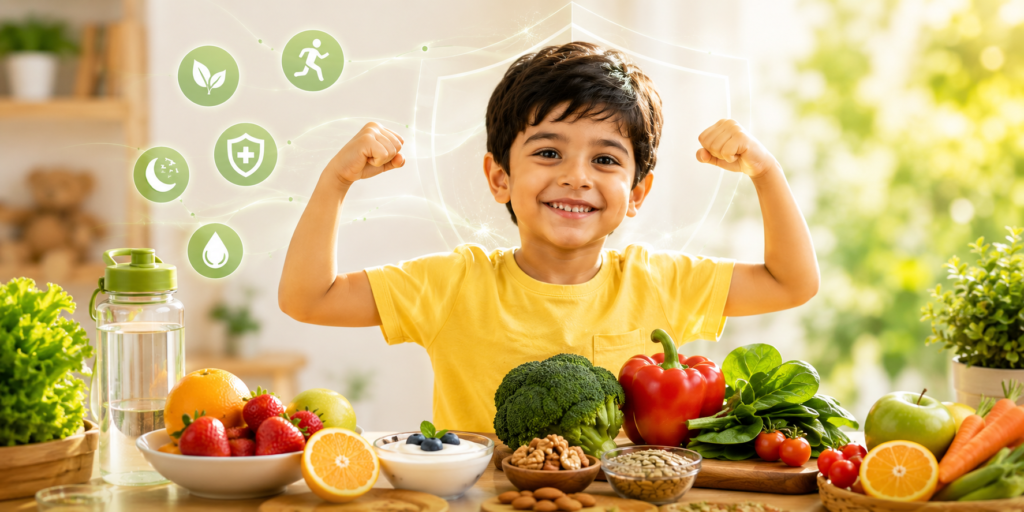
Nutrition is the most powerful lever for immunity. Add immunity booster foods for kids like citrus fruits, leafy greens, nuts, seeds, and whole grains to daily meals.These are the best foods for kids’ immune system, packed with important vitamins, antioxidants and minerals that help the body’s natural defences work right.
- Build a Balanced, Colorful Plate
A healthy diet for kids is not about restriction; it’s about variety and balance. Combine proteins, healthy fats, whole grains and colourful veggies for a full nutrient profile. This paediatric nutrition approach provides your child with essential nutrients. It helps fight infections and supports a healthy immune system.
- Never Compromise on Sleep
Children’s sleep and immunity are strongly linked.Quality, deep sleep helps the body make cells that fight infection and repair itself.Toddlers need to get 11 to 14 hours of sleep, and school-age children need 9 to 11 hours. A consistent bedtime routine is one of the most effective daily habits for healthy kids – and one of the easiest to implement.
- Make Movement Non-Negotiable
Exercise does more than build strong muscles. It also improves blood circulation, reduces stress hormones, and strengthens the immune system. In addition, encourage your child to enjoy at least 60 minutes of outdoor play every day. This can include riding a bicycle, playing in the park, or taking part in other physical activities. As a result, active children are less likely to get sick during seasonal changes and are more likely to maintain good overall health.
- Focus on Hydration
Hydration is often overlooked. Water helps flush out toxins, supports digestion, and keeps the body’s natural defence system working properly. Make water your principal drink, especially in hot or dry climates.
- Strengthen Gut Health
A significant part of the immune system resides in the gut. Include probiotic-rich foods such as curd and other fermented foods. They support healthy gut bacteria and strengthen the body’s ability to fight infections. This is one of the best natural ways to prevent frequent colds, which is underrated.
- Ensure Key Vitamins Are Covered
Vitamins that support children’s immunity, particularly Vitamin C, Vitamin D, and Zinc, play an important role in maintaining a healthy immune system. To support these nutrients naturally, include zinc-rich foods such as nuts and seeds in your child’s diet. In addition, offer Vitamin C-rich fruits like oranges, guava, and amla regularly. Furthermore, encourage outdoor play to help your child get natural Vitamin D from sunlight. However, always consult your paediatrician before introducing any vitamin supplements.
- Build Strong Hygiene Habits
- Good and consistent hygiene habits make a huge difference in exposure to germs:
- Wash your hands frequently before eating
- Always cover your mouth when coughing or sneezing
- Frequent washing, and clean fingernails
- These habits are a great first line of defence when combined with good nutrition and are **kids immunity tips** every family should practise.
- Support Emotional Wellbeing
Children also experience stress from school, daily routines, or environmental changes. Long-term stress can weaken the body’s ability to fight illness. Playtime, relaxation and open communication support emotional balance and family wellness and strengthen the mind-body connection that is essential to increase immunity in children.
- Adapt to Seasonal Needs
- Seasonal immunity tips for kids are important because kids are most susceptible during weather changes.Monsoon health tips for kids Avoid standing water, keep drinking water clean and include warm, easily digestible meals with seasonal fruits for kids.
- Back-to-school immunity tips
- Stick to a regular sleep schedule, include
- immunity-boosting fruits for kids
- in school lunches and get back to hygiene practices as schedules change.
- Adapt to the season: One of the most practical natural health tips for kids during monsoon and beyond. Helping to improve child’s immune system consistently, all year round.

Bringing It All Together
It’s not expensive supplements or complicated regimens that raise a healthy child. It’s consistency. Parents can naturally support their child’s developing immune system. Healthy eating, quality sleep, regular physical activity, hydration, cleanliness, and emotional well-being all play an important role.
Below are 10 strategies that are the best natural ways to boost immunity in kids. Together they provide a complete, practical answer to how to build a strong immune system in kids.A couple of these habits and you’ll likely see less sick days, a faster recovery and a more energetic and resilient child.A good child immunity booster routine doesn’t happen overnight – but the right daily habits become second nature, and help keep your child healthier through every season of the year.
Disclaimer: This article is intended for general informational purposes. Please consult a pediatrician before making significant changes to your child’s diet or introducing new supplements.